Blog
Why Redevelopment Projects Need Digital Transformation
- Redevelopment
- Digital Transformation
- Insight
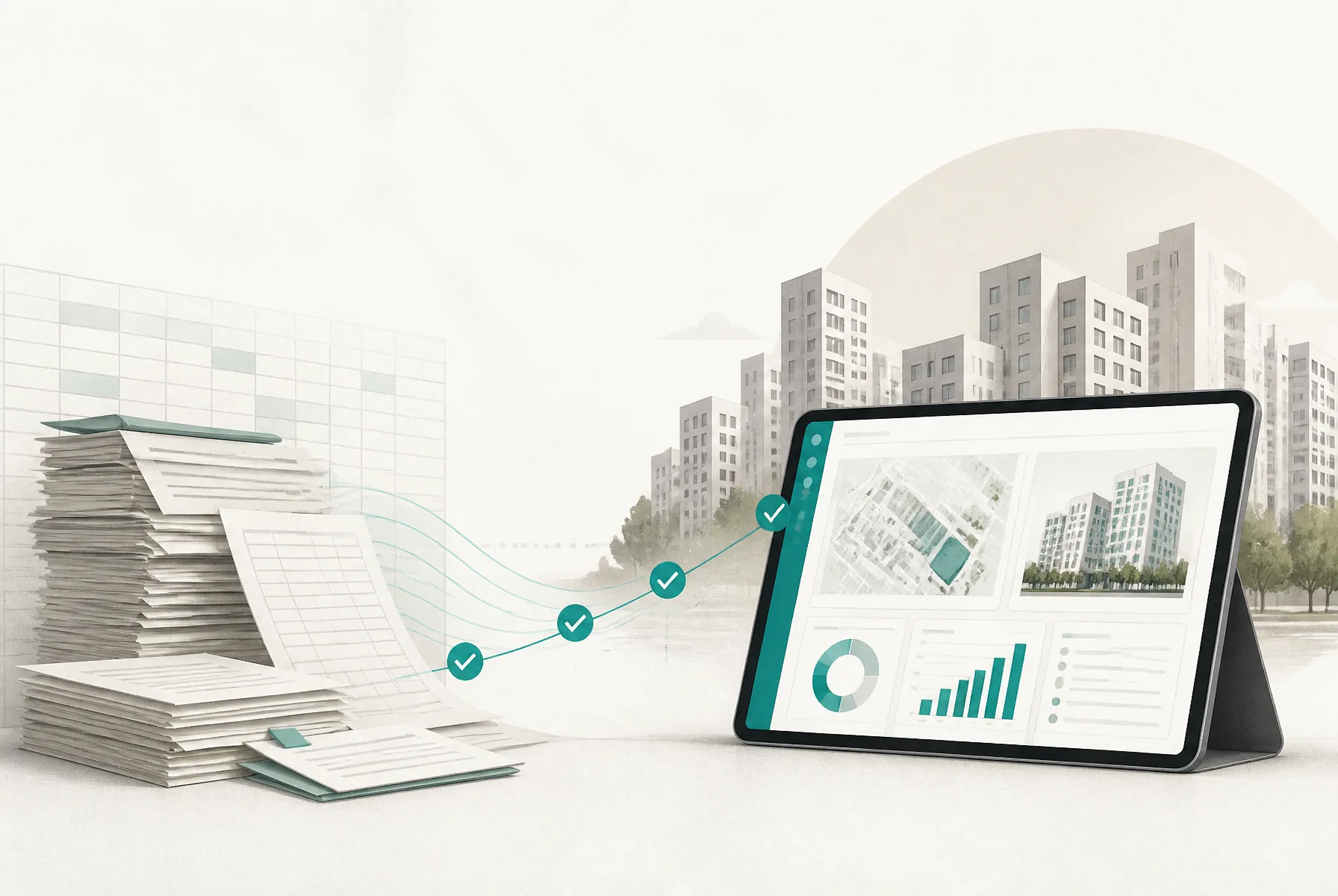
Redevelopment and reconstruction projects are large undertakings — a single complex can involve anywhere from tens of billions to trillions of won. And yet much of the decision-making still happens on paper resolution forms and spreadsheets.
Why still paper?
The decision-making structure of redevelopment is inherently complex. Hundreds to thousands of association members take part in resolutions at each general meeting, and the outcome must carry legal weight. Three problems recur throughout this process.
- Information asymmetry — the leadership and ordinary members hold very different amounts of information.
- Opaque procedures — it's hard to trace who agreed to what, and when.
- Barriers to participation — for elderly members, attending an in-person meeting is a real burden.
What digital transformation changes
Digital transformation isn't simply moving paper onto a screen. It's redesigning the structure of trust in a redevelopment project.
Transparent decisions
Electronic voting shows turnout in real time, but to prevent outcome bias it never reveals for/against tallies until voting closes. Every step of the procedure is preserved as a record.
Designed for everyone
Large text, wide touch targets, a simple flow. Even elderly members should be able to take part in resolutions directly from their phone.
Technology is a means, not an end. In redevelopment, the point of going digital is to let more people participate more easily and more transparently.
Through electronic voting, the Urban Redevelopment AI Chatbot, site recording, and an education platform, CtreehouseLab builds an environment where every stakeholder can take part more easily and transparently.